How much should I bid in a fantasy basketball auction draft?
Updated
Start from what the player is worth across your league's categories, turned into dollars so the whole room's budget is spent. Then adjust while the draft runs: when other teams overpay, the players left get cheaper, and when bargains go, they get dearer. Pay less for a player who wouldn't start for you, and never bid so much that you can't fill your other spots at $1 each.
A player's price comes from his categories
In a head-to-head categories league, a player is worth what he adds to each category compared with the players you could get for $1. Add up those category values and spread the league's total budget across the players worth drafting, and you get a dollar value for each.
Percentages count by volume. A center who shoots 60% on many attempts helps field goal percentage far more than a guard who shoots 60% on a few. Missed games matter too: a player who sits often is worth less, though not to zero, since you can pick someone up while he's out.
Prices move during the draft
Pre-draft values are a starting point. Every sale changes what the money left can buy. If the first rounds go well over value, the remaining teams have less money for the same players, so the players left will go cheaper than their list price. If early bargains go, there's more money chasing fewer good players, and prices rise.
So recompute as you go: the money every team has left, minus $1 for each of their open spots, against the value of the players still worth drafting.
Your max bid depends on your roster
The same player can be worth a different amount to you than to the next team:
- If he wouldn't start for you because your positions are already filled, he's worth less to you.
- If you're punting a category, his stats in it don't count for you.
- Keep $1 for each roster spot you still have to fill. The most you can bid is your money left minus those dollars.
Know your best buys before they're nominated
Late in the draft, the best value is often a player whose price has fallen below what he'd add to your team. Keep a short list of those, and when you nominate, put up players you don't want so other teams spend their money first.
Fantasy IQ shows your max bid in the draft room
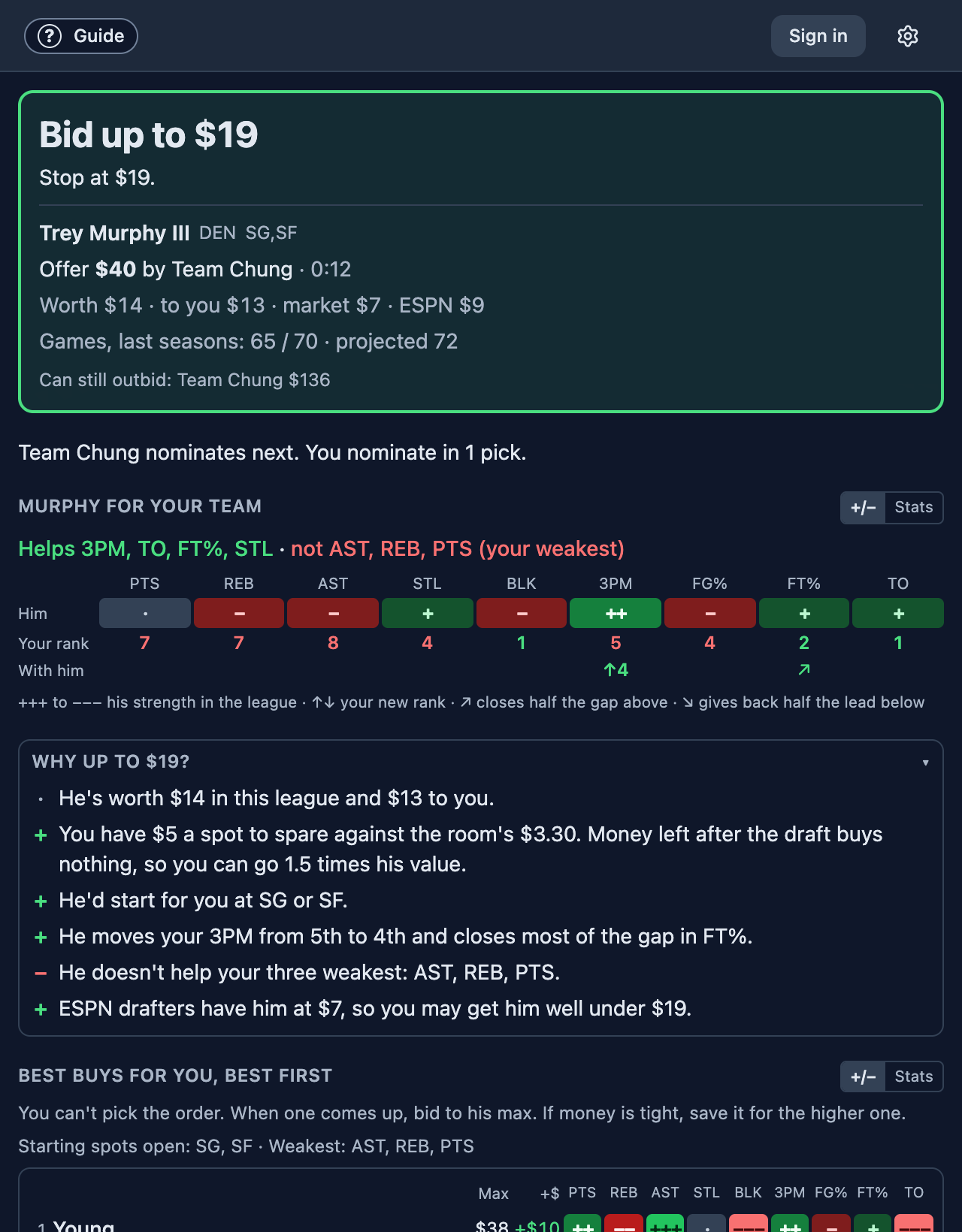
ChatGPT can't see your league, your draft room or how much money each team has left. Fantasy IQ is a Chrome extension that reads your ESPN league as you browse. Open your ESPN auction draft room and its side panel becomes a draft board: the most to bid for the player up, which of your categories he helps, why that's his max, and the best buys left, with prices updated after every sale. It never bids for you. Works with ESPN head-to-head categories leagues.
Common questions
- How much should I spend on my first player in an auction draft?
- No more than his value to your team at current prices, and never so much that you can't fill the rest of your roster at $1 a spot. Early prices tend to run high, so the players later in the draft often go for less than their value.
- Are auction values the same as rankings?
- No. Rankings put players in order; auction values say how much more one player is worth than another. In categories leagues the gap between the top players and the rest is often bigger than a ranking suggests.
- Should I keep money for the end of the draft?
- Keep at least $1 for every open spot. Beyond that, having money late is only useful if good players are left; if most teams are spending early, late bargains are where the value is.
- Is there an auction draft helper for ESPN fantasy basketball?
- Yes. The Fantasy IQ Chrome extension turns your ESPN auction draft room into a draft board for head-to-head categories leagues, with a max bid for the player up, his category fit and the best buys left.