Is this trade fair in a fantasy basketball categories league?
Updated
In a head-to-head categories league, ask two questions. Is it fair: are the players you give and get worth about the same per game? Is it good for you: after the trade, would you beat more of the teams in your league, given the categories you win and lose? A trade can be fair and still bad for you, and the other manager is asking the same questions about their side.
Fair and good are different questions
Trade value charts and rankings answer the first question: two players with similar overall value make a fair swap. That tells you whether a league-mate will take the offer seriously.
It doesn't tell you whether the trade helps you. In categories, a player is worth more to a team that needs what he does. Trading a scorer for a shot blocker of equal value can win you matchups if you lose blocks every week and win points by a mile, and lose you matchups if it's the other way round.
Judge it by the categories you win and lose
Before you send or accept a trade, go through your categories:
- Where you're safely ahead: giving up some of it costs you little.
- Where you're close: a small gain can turn losses into wins.
- Where you're far behind and punting: adding more of it does nothing for you.
- Percentages: a high-volume shooter moves field goal or free throw percentage more than a low-volume one.
Count matchups, not just totals
A trade is kept for the rest of the season, so judge it against every team in your league, not only this week's opponent. The useful number is how many more of those matchups you'd expect to win with your new roster than with your old one.
That number can be small and still matter. Turning a coin-flip category into a likely win against several teams is often worth more than a big jump in a category you already win.
Check the other side too
A trade only happens if the other manager says yes. Run the same check for their roster: does it help them win more matchups, or cost them only a little? Offers that help both teams are the ones that get accepted. If it costs them a lot, expect a no, or add a player to even it out.
Fantasy IQ grades trades for your league
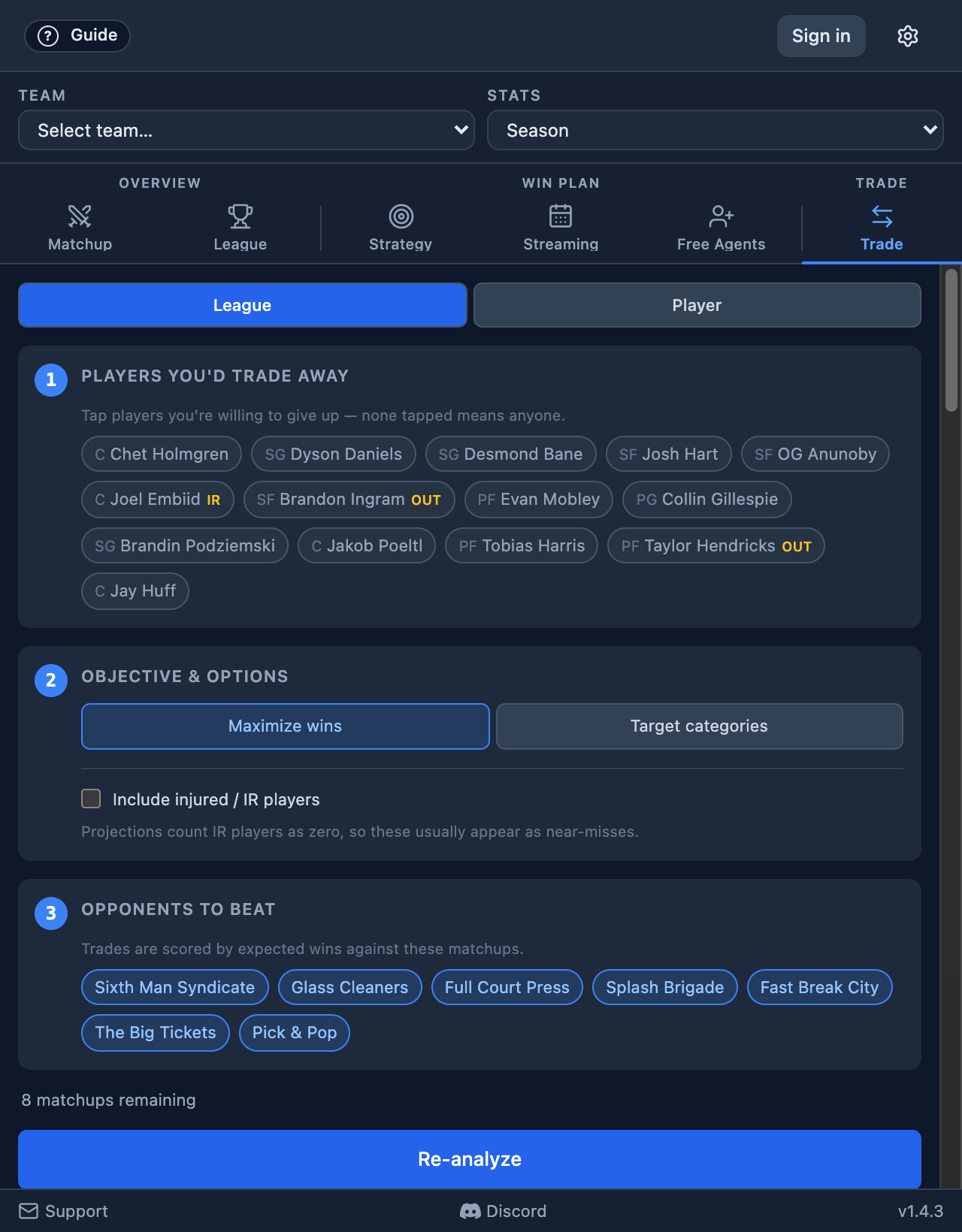
ChatGPT can't see your league, your categories or the other team's roster. Fantasy IQ is a Chrome extension that reads your ESPN league as you browse. Its Trades tab scores a trade from both sides: how many more matchups each team would expect to win against the rest of the league, category by category, and whether the players are close in value. It searches every team in your league for offers that help you without costing the other team too much, or grades a trade you name. It doesn't wait for you to bring it a deal. Works with ESPN head-to-head categories leagues.
Common questions
- How do I know if a fantasy basketball trade is fair?
- Compare what the players are worth per game across all categories. If the values are close, the trade is fair. Whether it is good for you depends on your categories: a fair trade that adds what you're losing helps, one that adds what you already win doesn't.
- Should I trade for a player in a category I'm punting?
- Usually not. If you've given up a category, stats in it don't win you matchups. Trade those stats away for help in categories you're close in.
- Why did my league-mate turn down a fair trade?
- Fair value isn't the same as helping their team. If the trade makes their categories worse, they lose matchups even when the players are worth the same. Offers that also fill their weak categories get accepted more often.
- Is there a trade analyzer for ESPN fantasy basketball categories leagues?
- Yes. The Fantasy IQ Chrome extension reads your ESPN head-to-head categories league and scores trades from both sides by the matchups each team would expect to win, category by category.